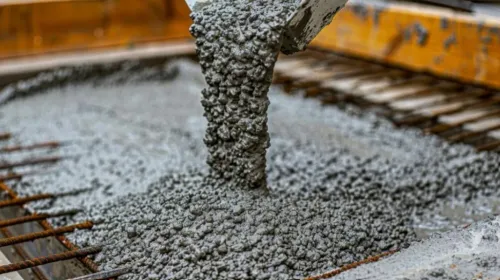

A large concrete pour can fail even when the supplier has an adequate nominal plant capacity: traffic, truck queues, pump limits, delayed discharge and an incomplete mix specification can stop placement or compromise quality. By the end, you will have a practical framework for comparing suppliers, testing their delivery plan and writing acceptance, backup and payment terms that match the project risk.
Key takeaways
- Specify durability, pumpability, finish and early-age performance—not only M25 or M40.
- Verify the supplier’s hourly output, backup plant and truck allocation before award.
- Test delivery routes, washout space and traffic contingencies against your Bengaluru site.
- Agree testing, rejection, records and failure-cost responsibilities in the contract.
Define the concrete before you compare suppliers
Specify more than a concrete grade: state the performance the structure and pour actually require. M25 or M40 gives characteristic compressive strength, not durability, pumpability, finishability or early-age performance. Base the specification on IS 456:2000 durability provisions and the project’s exposure classification.
| Specification item | What to state | Why it matters |
|---|---|---|
| Characteristic strength | M25, M40 or the designed grade | Defines the structural strength |
| Durability limits | Maximum water–cement ratio and minimum cementitious content | Exposure classification can impose stricter limits than the grade |
| Materials | Cementitious-material limits, aggregate size, approved admixtures and aggregate source | Controls heat, shrinkage, workability and consistency |
| Fresh concrete | Slump or slump-flow at placement, concrete temperature limit and delivery-time limit | A truck can meet slump yet arrive too hot or lose usable workability |
| Early performance | Required strength at specified early ages | Determines formwork removal, post-tensioning or construction speed |
Require the supplier’s mix design and trial-batch records to follow IS 10262:2019. Ask for trials using the proposed aggregates and admixtures, pumped through the intended line diameter and approximate length; do not accept slump alone as proof of pumpability.
- Name the sampling point, frequency, test age, laboratory, specimen curing method and witness rights.
- Put IS 456 acceptance rules in the contract, including the mean of four consecutive results and the minimum individual result.
- Define charges and authority for rejecting loads, retesting, pump standby, emergency replacement and stopping the pour.
Check whether the supplier can sustain your pour rate
A supplier proves continuity with a pour-specific dispatch model, not installed plant capacity. Set the required placing rate in cubic metres per hour, then compare it with the pump’s practical output, batching capacity, truck turnaround time and site unloading time. Include reserve capacity so one delay does not stop the pour.
Ask for these records and commitments:
- A load-by-load dispatch plan showing staggered departure intervals, the number of transit mixers assigned, expected cycle time, confirmed route and contingency vehicles.
- The pump model, rated and practical pump capacity, delivery-line diameter and approximate line length. Require a trial batch through the intended pump; slump alone does not prove pumpability, especially for high-rise work, heavily reinforced members or mixes containing manufactured sand and supplementary cementitious materials.
- Verified peak output from the serving plant, not its brochure figure, plus the number of operational plants, backup power, spare trucks, maintenance response time and laboratory coverage outside normal hours.
- A written response plan for plant breakdown, traffic delay, power failure, pump failure, rain and rejected loads, including emergency replacement supply.
- Contract terms assigning responsibility and charges for pump standby, truck detention, washout, cancelled pours, additional testing and traffic-related interruption. Name who can continue or stop the pour.
Test the plan against the actual placing rate with a timed rehearsal or records from a comparable continuous pour. Reject a proposal that meets the hourly calculation only if every truck arrives on schedule; large pours need recoverable slack.
Test the delivery plan against Bengaluru site conditions
Treat the 90-minute delivery period in IS 4926 as a hard planning constraint from water addition or batching to discharge, not from truck arrival. Extend it only with a documented, approved admixture system and project procedure; define how delayed loads, extensions and retempering will be handled.
| Check | Confirm | Consequence |
|---|---|---|
| Route survey | Junction restrictions, Bengaluru traffic windows, road width, turning space, diversions and truck axle limits | A nominally short route can strand a load before discharge |
| Truck sequencing | Staggered dispatch intervals matched to placing rate, pump output and truck turnaround time | Queuing trucks create gaps, while a traffic delay interrupts the pour |
| Site access | Gate width, overhead clearances, internal gradients, reversing space, pump position and an all-weather truck route | A mixer that reaches the project may still be unable to reach the pump |
| Wet-season control | Aggregate moisture corrections, covered stockpiles and batching records after rain | Uncorrected moisture changes slump and the actual water–cement ratio |
| Washout | A designated washout area that keeps slurry and alkaline water out of storm drains | Improvised cleaning creates environmental breaches and blocks access |
Ask for a dispatch plan with contingency vehicles, an alternate route and escalation contacts for traffic, plant, pump or power failure. Record batch time, truck number, discharge time and any site-added admixture on every ticket.
For rafts or other heat-sensitive pours, add maximum fresh-concrete temperature, placement rate, lift sequence and curing controls; a high-strength mix is not automatically low-heat.
Set quality records and site acceptance rules before award
Accept a structural load only when its concrete can be traced, tested and rejected against written limits. Require a batch ticket for every truck showing batch time, truck number, mix code, plant, ticketed volume, cementitious materials, water, aggregate, admixture, discharge time, slump or slump-flow, and any site-added admixture.
Without this record, a cube failure cannot be tied to a load or process change.
Before award, obtain mix designs and trial-batch evidence prepared to IS 10262:2019. Require calibration certificates and recent maintenance records for weighing systems, moisture probes, thermometers and testing equipment. A general quality certificate does not verify the plant, aggregate sources, approved mix version or laboratory serving your project.
Write these controls into the purchase contract:
- Define sampling location, frequency, laboratory, specimen curing, test age and witness rights for slump testing and cube testing.
- Permit slump recovery only with the approved admixture, within mix-design limits, recorded on the batch ticket; prohibit unapproved water additions.
- Require a pump trial using the intended pump, line diameter and approximate line length. Slump alone does not prove pumpability.
- State the investigation, retesting and load-rejection procedure.
| Check | Evidence to demand | Reject or investigate when |
|---|---|---|
| Slump | Site result against specified range | Out of range, unauthorised water or missing record |
| Strength | Cube results under IS 456, including four-result mean and individual minimum | Any stated acceptance criterion fails |
| Traceability | Complete batch ticket and calibration certificates | Load identity, quantities or equipment status is unknown |
Compare resilience, failure responsibilities and total commercial risk
Installed plant capacity proves little if trucks, power or testing fail during your pour. Compare each bidder’s verified peak output, number of operational batching plants serving the site, maximum simultaneous pours, transit-mixer fleet and pump availability against your required placing rate.
| Measure | Lower-risk evidence | Risk if missing |
|---|---|---|
| Plant continuity | Tested peak output, spare trucks, backup power, alternate aggregate and cementitious-material sources | A continuous pour stops despite adequate nominal capacity |
| Equipment readiness | Recent calibration and maintenance records for weighers, moisture probes, thermometers and testing equipment; defined maintenance response | Incorrect batching or prolonged plant downtime |
| Quality coverage | Laboratory staff, sampling and testing outside normal hours, approved mix version and traceable reports | A rejected load or disputed result delays the pour |
| Failure recovery | Written alternate-plant, emergency-replacement and escalation plan | You carry the cost of interruption and cold joints |
| Site controls | Confirmed dispatch intervals, route contingency and washout arrangements | Queues, traffic delays or slurry entering storm drains create extra cost |
Ask SCP INFRA, as you would any bidder, to show records for the actual plant and material sources assigned to your project; a third-party certificate does not verify those arrangements.
Put every failure mode in the contract, not in an informal promise. Your non-conformance procedure must assign responsibility and charges for rejected loads, pump standby, truck detention, cancelled pours, additional testing and emergency supply, while naming who can stop or continue placement. Tie acceptance to the agreed IS 456 sampling, curing, test-age and retesting process.
Frequently asked questions
What should you specify besides the concrete grade?
Define durability under IS 456:2000 exposure conditions, along with pumpability, finishability, workability retention and early-age strength needs.
How do you check whether a supplier can sustain a large pour?
Request the planned hourly output, dispatch interval, available trucks, pump capacity, plant location and backup arrangements, then compare them with your pour rate.
What delivery risks should Bengaluru projects test?
Review route restrictions, peak traffic, travel time, site access, truck queuing, washout space, pump positioning and contingency plans for delays.
Which quality records and acceptance rules belong in the contract?
Set out approved mix details, batch tickets, cube sampling, slump checks, temperature records, delivery limits, rejection triggers and responsibility for nonconforming concrete.
How should you compare supplier risk beyond the quoted rate?
Compare backup capacity, delay and defect responsibilities, replacement procedures, testing costs, escalation terms and the financial impact of a failed pour.