
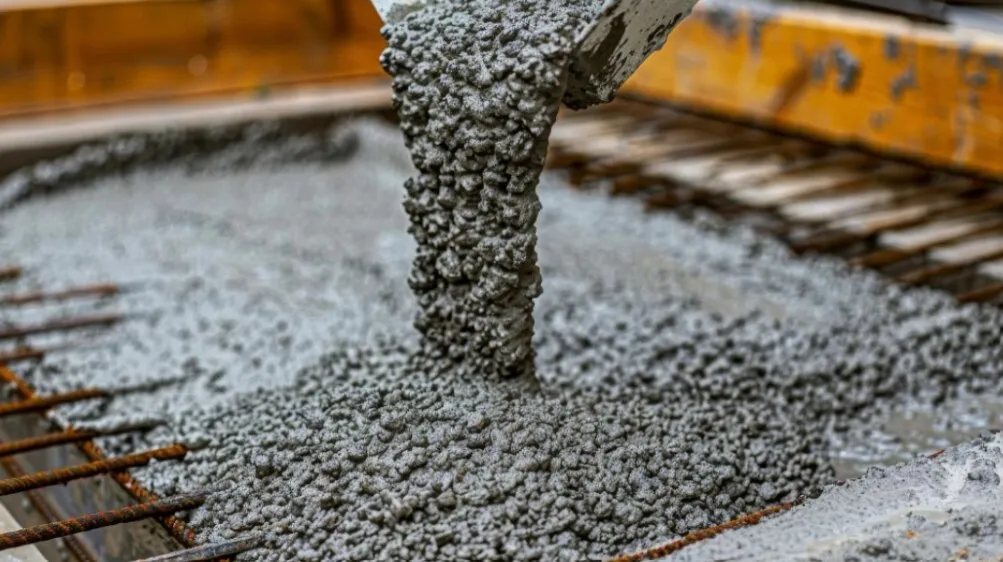
An M40 quotation is not comparable on the grade label alone. Before you place an order, you need to verify the mix design, define the delivery and testing controls, and convert every hidden transport, pumping, waiting, and rejection cost into written purchase terms.
Key takeaways
- Confirm M40 uses 40 N/mm² characteristic strength at 28 days.
- Request mix design, test reports, and IS 456 acceptance records.
- Give the supplier pour details, access limits, and placement requirements.
- Record water additions, cube tests, delivery times, and rejected loads.
Confirm What the Supplier’s M40 Grade Actually Means
M40 means a characteristic compressive strength of 40 N/mm² at 28 days, measured on 150 mm cubes; it does not mean every cube or structural location will reach exactly 40 MPa. Require the purchase specification to name the applicable IS 456 acceptance criteria and the testing method in the relevant IS 516 part.
Do not compare quotations by grade and cement content alone. M40 must be a design mix: IS 456 provides no nominal mix designation above M20. The supplier’s target mean strength, approved proportions, exposure class, permissible water-cement ratio and minimum cementitious content must match your design and durability requirements.
Before ordering, confirm:
- Whether the mix is cement-only or contains fly ash, GGBS or another supplementary cementitious material. A blended mix can gain strength more slowly, so write the required acceptance age and early-age strength or loading criterion into the order if you need early formwork removal, post-tensioning or rapid loading.
- How the proposed mix controls pumpability, shrinkage, heat and admixture compatibility; an excessively cement-rich mix can create problems despite passing cube strength.
- The mix-water and constituent-material chloride values, with compliance against IS 456 chloride limits where reinforced concrete corrosion risk matters.
- That weighing systems, water meters and admixture dispensers are currently calibrated, and that aggregate source, grading, moisture and admixture brand match the trial mix. Changes can alter slump and strength without changing the advertised M40 grade.
Request the Technical and Quality Records Before Ordering
Do not accept an M40 quotation on the grade name alone. Obtain the approved mix design and trial-mix sheet before placing the order, then compare the supplier’s technical values with your project specification.
Ask for the following records:
- Approved mix design showing target mean strength above 40 MPa, water-cementitious ratio, cementitious materials, aggregate grading, nominal maximum size, admixture dosage, discharge slump and density.
- Trial-mix sheet identifying the aggregate source, sand grading, cement and admixture brands, batch proportions and test results.
- Concrete test reports with specimen identification, sampling date, testing laboratory, curing method and 7-day or 28-day results.
- Current calibration records for weighing systems, water meters and admixture dispensers.
- Material traceability records linking cement, aggregates and admixtures to their batch or supplier.
- A sample batch ticket and delivery challan showing batch number, production time, truck, quantities, delivered volume and authorised additions.
| Document | What to check | Why it matters |
|---|---|---|
| Calibration records | Validity date and equipment identification | An unverified meter can change the water-cementitious ratio |
| Test reports | Sample numbers, curing and laboratory details | A certificate without traceability proves little |
| Batch records | Moisture corrections and weighed quantities | Aggregate moisture can alter slump and strength |
Confirm that the aggregate source, grading and admixture brand match the trial mix. Agree the sampling plan, three-cube sample, curing arrangements and dispute process before the pour; one anomalous cube should trigger record review, not automatic rejection.
Give the Supplier a Complete Pour Brief
Give the supplier quantities and site conditions, not just “M40 for a slab.” Your pour brief must connect the approved design mix to the way concrete will travel, discharge and be finished.
- State the required volume, pour rate, pour sequence, element dimensions and planned start and finish times.
- Describe the placement method: boom pump, line pump, crane bucket or direct discharge. Confirm pump access, line length, vertical lift, bends and space for truck manoeuvring.
- Specify the slump at discharge, measured where concrete enters the formwork. “Pumpable” is not a measurable requirement.
- State the maximum aggregate size, reinforcement congestion, cover, section thickness and finishing method.
- Identify exposure conditions, durability limits, cement or supplementary cementitious material restrictions, and any admixture restrictions.
- Write the required strength-test age and early-age requirements for formwork removal, post-tensioning or loading. Ask whether the M40 contains cement only, fly ash or GGBS.
- Provide the batching plant, delivery route, site access hours, dispatch interval, standby plan and the maximum agreed elapsed time under IS 4926.
Ask the supplier to confirm that aggregate source, grading, moisture assumptions and admixture brand match the trial mix. Before a major pour, check current calibration or verification records for weighing systems, water meters and admixture dispensers. Record any approved slump adjustment with admixture on the delivery ticket; adding water changes the approved water-cementitious ratio.
Control Delivery, Site Testing, and Water Addition
Treat every truck as a separate delivery, not as part of an assumed uniform batch. Match the batch ticket and delivery challan to the approved mix, checking the batch number, production time, truck number, delivered volume, material quantities, admixture, and any authorised addition.
Weigh-batch records and aggregate-moisture corrections provide stronger evidence than a generic “computerised plant” statement.
Before dispatch, agree the site controls in writing:
- Check the route, Bengaluru peak-traffic time, access restrictions, pump setup, dispatch interval, standby vehicle, and cancellation notice.
- Record the maximum agreed elapsed time under IS 4926 and the action for a late load, including hold, rejection, or approved retesting.
- Perform slump checking at discharge for the placing method. A boom pump, long line, or congested column may need different rheology; “pumpable” is not a measurement.
- Do not add site water informally. Water changes the approved water-cementitious ratio; use only the approved admixture procedure and record every adjustment on the ticket.
- Cover trucks and protect the pour from rain. Stop discharge if rainwater enters the load or washes paste from the surface, then record who accepts, modifies, holds, or rejects it.
Use an agreed sampling plan, laboratory, curing method, and chain of custody. Identify sampled cubes by truck and batch; under IS 456, a sample normally contains three specimens, and acceptance uses group results and individual-result limits. Poor curing can make sound concrete appear weak.
A pump blockage, reinforcement congestion, or weather interruption also requires a restart plan to prevent a cold joint.
Compare the Delivered Cost and Write Clear Order Terms
Compare each quotation as a delivered, usable-cubic-metre cost, not as the lowest M40 rate per truck. Reconcile the same required volume, dispatch interval, route time, pump arrangement and agreed discharge limit under IS 4926 before comparing offers.
| Quote item | Compare this | Write this in the purchase order |
|---|---|---|
| Concrete quantity | Required volume versus nominal truck capacity | Measured delivered volume, permitted short-load or over-load tolerance, and minimum-load charges |
| Movement and placement | Transport, pumping charges, pump setup and priming material | Whether each charge is included, and who pays for unused priming material |
| Delay exposure | Waiting time, standby vehicles and cancellation | Free waiting period, standby rate, cancellation notice and charge |
| Rejected supply | Off-specification, rain-affected or over-age loads | Supplier’s responsibility for replacement, return transport and disposal |
For a Bengaluru pour, test the quoted transport plan against peak-traffic route time, access restrictions and pump access. State the batching plant, truck sequence, maximum agreed elapsed time, and the action when a load exceeds it; otherwise repeated waiting can cause slump loss, temperature rise and a cold joint.
Your order terms must also name who may hold, modify or reject concrete after rain, and require that decision on the delivery record. Do not permit an informal water addition. Ask SCP INFRA, or any competing supplier, to attach the approved volume, batch-ticket format and backup plan to the quotation.
- Confirm whether the price includes pumping charges, transport, waiting time and minimum-load charges.
- Record rejected-load responsibility, pump blockage responsibility and the cancellation deadline.
- Match every invoice to truck identification, batch number, delivered volume and authorised additions.
Related product
 | M40 Ready Mix Concrete (RMC) is a premium high-performance concrete specifically engineered for critical structural applications that require exceptional strength,... View product → |
Frequently asked questions
What does M40 concrete grade mean when ordering?
M40 denotes a characteristic compressive strength of 40 N/mm² at 28 days, measured on 150 mm cubes. Your purchase specification should name IS 456 acceptance criteria and the applicable IS 516 testing method.
Which records should you request from an M40 concrete supplier?
Request the approved mix design, cement and aggregate details, admixture information, recent compressive-strength results, batch records, and documents showing compliance with the specified IS 456 acceptance criteria.
What information belongs in an M40 pour brief?
State the required grade, quantity, pour date and rate, placement method, slump requirement, reinforcement congestion, pump or access constraints, exposure conditions, and site contact details.
How should you control M40 concrete delivery and site testing?
Check the delivery ticket, arrival time, batch number, slump, and concrete temperature. Do not add water without approval; record any authorised addition and cast cubes using the specified IS 516 procedure.
How should contractors compare M40 supplier quotations?
Compare the delivered rate after transport, pumping, admixtures, testing, minimum-load charges, waiting time, and rejected-load terms. Put the grade, quantity, tolerances, testing, and liability terms in writing.