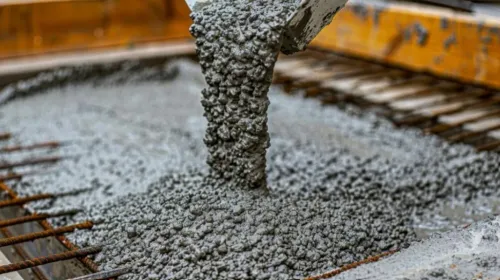
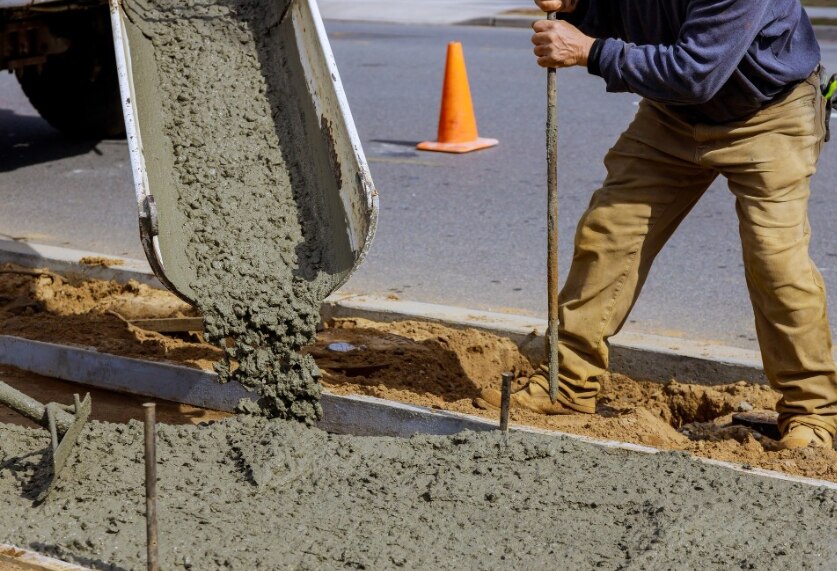
A nearby RMC plant is not automatically the safest choice: traffic, truck availability, dispatch control and mix traceability determine whether concrete reaches your site within the permitted discharge window. Use the checks below to build a shortlist, compare delivered costs, confirm the specified mix and control each load from batching through cube testing.
Key takeaways
- Compare route reliability, truck availability and discharge windows—not map distance alone.
- Confirm who controls batching, dispatch and replacement loads before signing.
- Match concrete grade, slump and exposure class to the engineer’s design.
- Inspect each load at discharge and record its batch number and test link.
Shortlist plants by route performance, not map distance
A plant 8 km from your site can still miss a pour if its trucks face Bengaluru’s peak-hour traffic. Compare the plant-to-site distance, delivery route, traffic exposure, truck availability and permitted discharge window instead of trusting a quoted delivery radius.
Before shortlisting an RMC manufacturer near me, ask for evidence from the actual route and planned pour time.
- Run the delivery route during the planned pour period and record travel time, junction delays and access restrictions.
- Ask for a dispatch schedule showing loading intervals, truck allocation, plant operating hours and the escalation contact for a late vehicle.
- Confirm the number of mixer trucks assigned, the backup plant and experience with continuous pours of similar volume.
- Check that travel time fits the approved workability-retention period, temperature controls and permitted discharge time.
- Trial one delivery sequence before a critical pour if route uncertainty could interrupt placement.
Compare the delivered-and-placed price, not only the rate per cubic metre. A lower quote becomes expensive when truck turnaround creates waiting or a late load forces you to delay the pour.
Confirm who controls batching, dispatch and replacement
Ask for the plant’s legal name, physical batching address and batch ticket issued from that plant. A genuine RMC manufacturer controls mix design and batching records; a seller who cannot identify the producing plant is acting as an RMC dealer or broker, not the manufacturer.
- RMC manufacturer: batches the concrete, records production time and mix details, assigns trucks, and decides how an approved replacement load will be produced.
- RMC dealer: buys or resells concrete from another plant. Confirm which plant controls the formulation, testing and replacement.
- Concrete transporter: supplies mixer trucks and drivers but does not control batching, quality approval or mix design.
- Concrete broker: arranges supply between you and a plant or dealer, often without owning the plant or trucks. Put the actual producer’s name on the order.
Write the chain of responsibility into the purchase order. Name who controls dispatch timing, site communication and replacement after a wrong mix, missing ticket, excessive elapsed time, out-of-range slump or visible segregation. Define whether replacement arrives without charge and how site-added water or admixture changes liability.
Your site team must sample at discharge, identify each sample with the pour and truck ticket, and use the named laboratory for cube testing. Do not accept a promise that the manufacturer’s laboratory will handle everything.
Match the purchase specification to the engineer’s design
Confirm the engineer’s complete performance specification before choosing a concrete grade; a nominal grade alone cannot define a suitable mix. Ask for the approved mix design and confirm these fields against the structural drawings and method statement:
| Specification item | Confirm before ordering | Why it matters |
|---|---|---|
| Concrete grade | M25, M30, M40 or the specified strength class, including required strength age | A 28-day requirement differs from an early-strength requirement |
| Exposure classification | Mild, moderate, severe, very severe or extreme under IS 456 | Durability limits can require a lower maximum water-cement ratio or higher cementitious content than the grade suggests |
| Water-cement ratio | The approved maximum value | Unauthorised water addition can reduce strength, durability and finish quality |
| Cementitious content | The specified minimum, where applicable | It supports durability and paste volume |
| Aggregate | Maximum size and grading suitable for the reinforcement spacing | Oversized or poorly graded aggregate can block a pump or leave voids |
| Workability | Slump at discharge and required slump retention period | An advertised slump does not prove compatibility with your travel time or placement |
| Placement method | Pump, tremie, boom, bucket, congested reinforcement and hose length | Each method affects aggregate grading, paste volume and admixture selection |
Require a trial mix for the intended pump, retention period and placement method. Put the approved mix designation, permitted admixtures, sampling frequency and three-cube sample representation under IS 456 in the purchase order.
Request records that prove traceability and plant control
Before placing the order, request records tied to the actual plant supplying your project. IS 4926 certification or documented compliance is a process benchmark, not proof that every delivered load will perform.
Ask for these documents:
- The approved mix-design sheet, including grade, exposure class, water-cement ratio and admixture dosage.
- The plant’s quality-control plan and non-conformance procedure.
- A current calibration certificate for weigh hoppers, water meters and admixture dispensers.
- Recent cube-test reports for the proposed grade and recent production dates.
| Record | Check before ordering | Why it matters |
|---|---|---|
| Batch ticket | Plant and truck identity, mix designation, quantity, batch/loading time, dispatch time, arrival, water and admixture quantities | Links the placed concrete to one batch |
| Delivery challan | Ticket number, truck number, quantity, mix and delivery time | Prevents disputes over what arrived |
| Test record | Sample date, cube identification, curing details and test age | Shows whether results belong to your mix |
Confirm that any site-added water or admixture requires an authorised person’s entry on the ticket, specified remixing time and a quality check. Put missing traceability, wrong mix and rejected-load replacement terms in the purchase order.
Compare delivered cost and protect the pour contractually
Compare each quotation on delivered-and-placed cost, not the rate per cubic metre. Add GST, pumping charges, minimum-load charges, testing, line relocation, waiting time, night or restricted-hour dispatch, cancellation fees and the cost of a delayed pour.
| Charge | Confirm in writing | Risk if omitted |
|---|---|---|
| Material and GST | Basic rate, tax treatment and approved mix designation | A cheap rate becomes expensive after tax or a mix change |
| Delivery and pump | Included hours, standby rate, line relocation and minimum load | Truck queues and pump movements inflate the invoice |
| Failure and delay | Replacement, rejected-load, cancellation and breakdown terms | You carry labour, pump and programme losses |
Ask for truck tickets showing the plant and truck identities, mix, quantity, batch or loading time, dispatch and arrival times, and water or admixture added. SCP INFRA should provide this traceability for the Bengaluru plant actually supplying your pour.
Put these points in the purchase order:
- Define rejection grounds: wrong mix, excessive elapsed time, out-of-range workability, missing ticket or segregation.
- Name who can reject a load and require a no-cost replacement.
- Record authorised site water or admixture additions, remixing time and resulting liability.
- State the response to plant, truck, pump, power or traffic failure, including approved backup supply.
Check every load at discharge and link it to test results
Do not accept a truck on the driver’s assurance alone. Before discharge, match the delivery ticket to the approved grade, mix designation, quantity, batch or ticket number, truck number, production time and stated slump.
Record arrival time, discharge start and finish times, site location, weather and any water or admixture added at site; obtain the authorised engineer’s approval before changing the mix.
Use one site checklist for every load:
- Inspect the ticket, truck condition and concrete appearance; stop discharge if the load is segregated, excessively stiff or outside the permitted delivery time.
- Perform the slump test at discharge in accordance with IS 1199, and record the result against that truck’s ticket number. A passing slump does not prove strength or suitability for congested reinforcement, pumping or tremie placement.
- Take the planned acceptance sample at discharge, not only from the manufacturer’s laboratory. Under IS 456, represent the sample with three cubes and follow the purchase order’s quantity-based sampling frequency.
- Mark each cube with the project, pour location, grade, truck number, sample time and cube number; record curing location and laboratory handover.
- Test compressive strength under IS 516 and link the seven-day warning result and specified 28-day cube test to the same load and pour records.
Quarantine disputed loads and document the reason, photographs and engineer’s decision before placement continues.
Frequently asked questions
How should you compare RMC manufacturers near a construction site?
Compare plant-to-site route time, peak-hour traffic, truck availability, permitted discharge windows and replacement arrangements instead of relying on map distance.
What should you confirm about batching and dispatch control?
Identify who controls mix batching, truck dispatch, delivery sequencing, quality checks and replacement loads when a truck is delayed or rejected.
Which concrete details must match the engineer’s design?
Check the specified grade, slump, aggregate size, exposure class, cement type, admixtures, placement method and required strength-test age before ordering.
What records prove ready-mix concrete traceability?
Request the mix-design approval, batch ticket, delivery ticket, batch number, truck number, production time, water or admixture additions and cube-test records.
How can you protect a concrete pour contractually?
Record the delivery window, truck interval, accepted tolerances, rejection procedure, replacement responsibility, standby costs and escalation contact in the purchase order.