
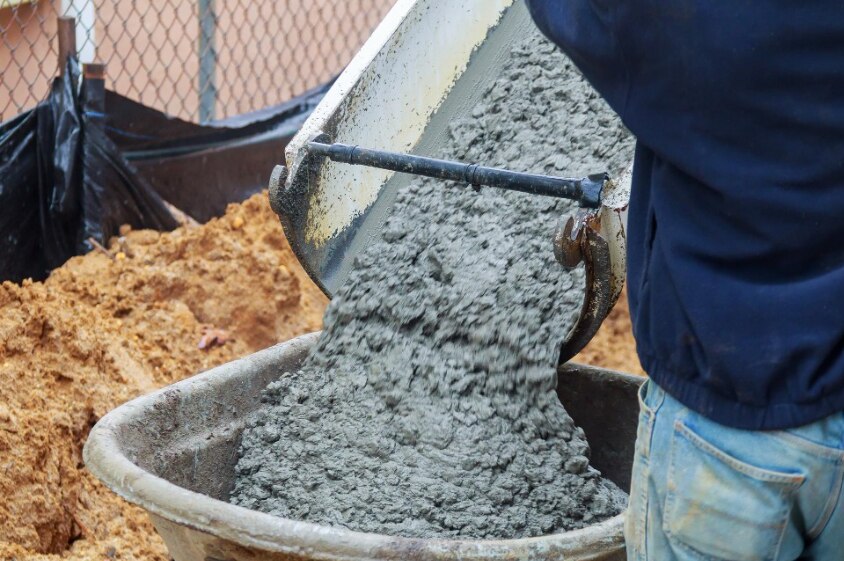
Concrete quality can change between the approved mix design, the batching plant, the truck and the pour. By the end, you will know which controls, records, tests and site practices reveal whether an RMC load is traceable and suitable for placement.
Key takeaways
- Reject ingredients without identity, acceptance records or confirmed quantities.
- Use calibrated weighing systems and compare batch tickets with the approved mix design.
- Check slump, temperature, dispatch time and batch details before accepting the load.
- Sample concrete at the site and record test results against the specified strength.
How materials are accepted and dosed at the batching plant
A batch should be held before mixing if any ingredient lacks an identity, acceptance record, or confirmed quantity. RMC supplier quality control starts at the batching plant, not when a truck reaches the site.
1. Confirm cement type, grade, manufacturer, lot number, delivery date and test certificate. Cement acceptance testing should cover fineness, setting time, soundness and compressive strength under the applicable IS 4031 methods, with acceptance against IS 456 and the approved mix design.
2. Complete aggregate inspection before unloading or batching. Check separate stockpiles for clean, properly graded material, clay lumps, organic contamination and excessive dust; measure moisture in each sand and aggregate bin, then correct the batch water. Wet sand adds unplanned water, while dry aggregate absorbs designed mixing water.
3. Verify that mixing water meets the quality requirements of IS 456 and that each admixture has its product identity, dosage range, batch number and compatibility approval. Check weighing scales, water meters and admixture dispensers against calibration records before production.
4. Load materials in the approved sequence and confirm the mixer’s validated mixing time, blade condition and liner condition. Underloading, overloading or worn blades can produce non-uniform concrete despite accurate ingredient weights.
Record the approved mix designation, ingredient weights, moisture corrections, admixture quantity, mixer cycle and operator or batch number. These records create the traceable evidence required by IS 4926; fresh-concrete checks under IS 1199 and strength testing under IS 516 come after batching.
How batching controls protect the approved mix design
An approved mix design survives batching only when each ingredient is measured against a recorded target. The key performance control is the water-cementitious-material ratio, not slump alone: extra water can restore slump while reducing strength and increasing permeability.
The plant protects the design through these controls:
- Cement and other cementitious materials are dosed by calibrated load cells. The batch computer compares actual weight with the approved mix target and stops or flags an out-of-tolerance dose.
- Aggregate weighing uses separate, calibrated weigh hoppers for each size. Incorrect proportions alter grading, workability and paste demand even when the total aggregate weight looks correct.
- Moisture correction converts measured aggregate moisture into an adjustment to batch water. Wet sand contributes water; dry aggregate absorbs designed mixing water. Ignoring either condition changes the effective water-cementitious-material ratio.
- Water dosing uses a calibrated meter or weigh system, including water already contributed by moist aggregates. Unauthorised hose-water addition must not be used to hide slump loss.
- Admixture calibration verifies the dispenser’s delivered volume against the approved dosage. A wrong dose can cause rapid slump loss, excessive retardation or inadequate air control.
The mixer receives ingredients in a validated sequence and runs for the approved mixing time. Worn blades, liners, underloading or overloading can leave a non-uniform batch despite correct weights.
Retain the batch record and delivery ticket showing mix designation, actual quantities, batch time, truck number, volume and authorised additions. Hold the load when those records conflict with the approved design or site instruction.
Which checks and records prove the load is ready to leave
A load is ready to leave only when the approved mix, actual batch data and delivery ticket agree. The ticket should identify:
- Mix designation and specified grade
- Batch date and time, truck number and load volume
- Cementitious-material, water, aggregate and admixture quantities
- Aggregate moisture corrections and any authorised additions
- Approved slump range, water-to-cementitious-material ratio and site instructions
The supplier must retain the batch record, not just print the ticket. Batch record retention links the load to weigh-hopper readings, water and admixture dispenser outputs, mixer sequence, operator adjustments and equipment verification records.
Request calibration or routine verification records for critical scales and dispensers; automation cannot prove that a gate discharged completely or that a scale was accurate.
Fresh-concrete evidence has a different purpose:
| Evidence | What it proves | Limitation |
|---|---|---|
| Slump test | Consistency at the sampling point | Does not prove strength or a correct water-to-cementitious-material ratio |
| Concrete temperature | Fresh concrete was within the specified temperature limit | Does not confirm batching accuracy |
| Visual uniformity | No obvious segregation, clumping or abnormal colour | Cannot replace measured tests |
| Truck revolutions and elapsed time | Agitation and delivery history | Does not cure unauthorised water addition |
Record the slump test, concrete temperature, visual uniformity, sampling time and truck number at discharge, following IS 1199 and the project specification. If water or admixture is added, record the amount, authorisation, remixing and revised ratio. Hold the load when ticket quantities conflict with the approved mix or site instruction.
How delivery controls preserve quality between plant and pour
A compliant batch stays compliant only if the clock, mixer and receiving site remain under control. Under IS 4926:2003, the normal 90-minute discharge limit is measured from water addition or commencement of mixing, not from the truck’s departure time.
1. Schedule trucks against the pour rate, placing crew and pump capacity. Avoid dispatching a load into a queue; traffic delays, pump setup and blocked access consume the available discharge period before concrete reaches the formwork.
2. Record the batch time, truck number, mix designation, load volume and truck-mixer revolutions on the delivery ticket. Compare the ticket with the approved mix and site instructions; hold the load if quantities or authorized additions do not match.
3. Keep the receiving area ready before arrival. Complete formwork, reinforcement, access, lighting, labour and vibration equipment first, because interrupted discharge can create construction joints or cold joints that delivery control cannot repair.
4. Treat slump loss as a warning, not permission for site-added water. Water changes the water-to-cementitious-material ratio, so concrete can regain slump while losing strength and increasing permeability.
5. Permit retempering only when the approved mix and responsible quality personnel authorize it. Record every water or admixture addition, confirm the permitted limit, remix thoroughly at the specified truck-mixer revolutions, and retest before discharge.
A longer than 90-minute period requires justification from the mix design and admixture system, plus agreement between the parties. Sample at discharge and link the slump, temperature and specimens to the truck and pour.
How sampling, testing and site work complete the quality chain
A strength result is representative only when its cube can be traced to a specific load and pour location. At discharge, follow IS 1199: take representative concrete, record the sampling time, check slump and temperature where specified, and cast labelled specimens. A good slump result cannot replace concrete cube testing.
- Truck number, delivery ticket, mix grade, pour location and discharge time.
- Specimen identification, mould condition, compaction method and sampler’s name.
- Demoulding date, curing location, curing conditions and laboratory receipt.
- Test age, failure load, machine identification and laboratory report number.
Test cubes under IS 516 and assess the series under IS 456:2000, which uses the mean of consecutive results and limits for individual results. Do not reject a supply because of one low cube without investigation, although a very low result requires prompt structural review.
Separate the causes by comparing evidence. Supplier-side concern rises when batch water, aggregate-moisture correction or unauthorised site water does not match the ticket, or several loads show low results. Placing concern rises when the concrete was dropped from excessive height, pumped poorly or inadequately vibrated, leaving segregation or honeycombing.
Curing or testing concern rises after late curing, delayed demoulding, damaged moulds or misaligned testing equipment.
For a load supplied by SCP INFRA, retain the ticket beside the pour record so the reported strength can be matched to the delivered batch rather than blamed on the wrong operation.
Related products
 | M7.5 Ready Mix Concrete (RMC) is a precision-engineered concrete mix designed for reliable performance in non-structural construction applications. View product → |
 | M25 Ready Mix Concrete (RMC) is a high-performance, factory-manufactured concrete engineered for superior strength, durability, and long-term structural reliability. View product → |
Frequently asked questions
How are materials accepted at an RMC batching plant?
The plant verifies each cement, aggregate, water and admixture against its identity, acceptance record and required quantity before batching. Materials without traceable approval are held back.
How do batching controls protect the approved mix design?
Operators use calibrated weigh hoppers, controlled admixture dosing and batch software to measure each ingredient against the approved proportions. The batch record provides a direct comparison with the mix design.
Which checks show that an RMC load is ready to leave?
The supplier checks the batch ticket, ingredient quantities, mix designation, truck number, loading time and production status. The ticket should identify the concrete grade and provide traceability to the batch.
How is concrete quality preserved during delivery and site placement?
The supplier controls dispatch timing, truck drum operation and delivery records, then checks slump and concrete temperature at site. Site sampling and cube testing complete the quality record.
Related products
 | M15 Ready Mix Concrete (RMC) is a high-quality, machine-batched concrete designed to provide superior strength, consistency, and durability for a variety of residential,... View product → |
 | M10 Ready Mix Concrete (RMC) is a premium-quality, factory-produced concrete mix engineered to deliver dependable strength, consistent performance, and excellent... View product → |
 | M20 Ready Mix Concrete (RMC) is a premium-grade, machine-batched concrete designed to deliver exceptional strength, durability, and consistent performance for residential,... View product → |
 | M35 Ready Mix Concrete (RMC) is a premium high-strength concrete developed for heavy-duty structural applications that demand exceptional strength, durability, and... View product → |