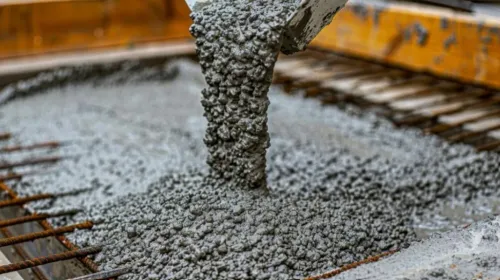

The correct dealer is not the one with the longest grade-and-rate table. You need to match the engineer’s specified grade and durability requirements with a verified mix, then confirm that the supplier can deliver the full volume at the required rate without compromising workability, traceability or approvals.
Key takeaways
- Use the engineer’s specified grade, exposure class and water-cement ratio.
- Request the mix design, slump range, test plan and quality-control records.
- Calculate theoretical volume, wastage and pour sequencing before ordering.
- Confirm truck capacity, pump rate, delivery window and backup arrangements.
Start With the Structural Specification, Not the Dealer’s Grade List
Choose the grade from the structural drawings and specification, not a dealer’s rate table. Concrete grade selection must follow the engineer’s design loads, member type, exposure class, maximum water-cement ratio, minimum cementitious content, cement and supplementary cementitious materials, aggregate size, admixture, slump and testing regime. IS 10262 covers mix proportioning.
The M-number meaning in concrete is the specified characteristic compressive strength in MPa at 28 days. A nominal mix uses prescribed proportions; a design mix establishes proportions through calculated trials and testing.
| Grade | Practical use | Decision |
|---|---|---|
| M7.5 | Blinding, levelling concrete | Not for structural members |
| M10 | Levelling layers and minor non-structural work | Not for reinforced slabs, footings or columns |
| M15 | Pavements, kerbs and plain concrete | Use structurally only with written engineering approval |
| M20 | Basic reinforced concrete and mild-exposure work | Minimum reinforced-concrete grade for mild exposure under IS 456 |
| M25 | Reinforced slabs, beams and footings | Minimum for moderate exposure |
| M35 | Severe exposure or demanding infrastructure | Check durability and placement controls |
| M40 | Very severe or high-load infrastructure | Minimum for extreme exposure under IS 456 is M40 |
| M45 | High-strength infrastructure elements | Specify only when the design requires it |
Exposure and strength are separate decisions. Under IS 456, minimum reinforced-concrete grades rise from M20 for mild to M40 for extreme exposure; a higher number does not compensate for excessive water-cement ratio, inadequate cover, poor curing or uncontrolled cracking.
Do not upgrade or downgrade the specified grade without written structural-engineer approval, because the change can affect safety, cost, reinforcement design and approvals.
Check the Mix Design, Workability and Quality Controls
Do not approve concrete from a grade-and-rate table alone. Require a signed mix-design submittal prepared to IS 10262, then compare its proportions with the engineer’s specification: cement type, supplementary cementitious materials, maximum water-cement ratio, minimum cementitious content, aggregate size, admixture and target strength.
| Evidence | Compare before approval | What it confirms |
|---|---|---|
| Mix design | Cement, SCM, aggregate grading, water-cement ratio and admixture dosage | The proposed M-grade is proportioned rather than advertised |
| Durability | Exposure class, specified cover, minimum cementitious content and maximum water-cement ratio | The mix can resist Bengaluru site conditions such as wet ground or recurring rain |
| Workability | Slump at the point of placement, retention period and test method | The concrete can be placed without adding water |
| Pump performance | A pumpable concrete mix showing aggregate size, fines, paste volume and admixture compatibility | Lower blockage and line-pressure risk |
| Quality controls | Trial results, 28-day cube-test regime, calibration records, batch tickets and material traceability | Consistent production, not one successful sample |
Specify slump where the concrete enters the form, especially for pumped placement. Transport can reduce slump, and informal water addition changes the designed water-cement ratio, strength and durability; any approved adjustment must use the stated admixture procedure and appear on the delivery ticket.
Check the proposed discharge window against IS 4926: concrete is generally discharged within two hours after water addition unless the mix design, admixture system and project procedure support longer. Compare route reliability, traffic-period dispatch planning and slump-retention evidence, not only the quoted rate.
Calculate the Required Volume Without Creating a Costly Shortfall
Start with the concrete volume calculation: measure the finished dimensions and use length × width × depth, converting millimetres to metres before multiplying. Reconcile that geometric quantity with the engineer’s quantity take-off and the shuttering actually erected; reinforcement congestion, construction joints and irregular edges can change the delivered requirement.
- Add a concrete wastage allowance based on the placement method and site records, not a convenient blanket percentage.
- Include pump-line hold-up, truck residuals, unavoidable spillage and any concrete trapped around congested reinforcement.
- Round the order to the supplier’s dispatch unit, then check whether the remainder triggers minimum load charges or a part-load fee.
- Ask the quotation to state the measurement basis for delivered volume, waiting charges, pump or boom charges, washout charges and cancelled-load treatment.
| Placement method | Quantity risks to check | Ordering decision |
|---|---|---|
| Direct chute or short discharge | Spillage at the pour edge, uneven shuttering and truck residuals | Add only the measured site allowance |
| Line pumping | Pipeline hold-up, priming material, blockage-related loss and planned relocation | Confirm the pump-line volume with the pump operator |
| Boom pumping | Hose or boom residuals, reach changes and interrupted discharge | Include the agreed equipment and residual allowance |
| Small or irregular pour | Minimum-load charges can exceed the cost of a small volume shortfall | Compare a second delivery with ordering surplus |
Recheck the calculated order against the planned pour end. Under-ordering can create an unplanned construction joint; excessive contingency leaves costly concrete to dispose of. Get the supplier to confirm whether its invoice measures dispatched, batched or accepted delivered volume.
Match Dealer Capacity to the Pour Rate and Delivery Window
Calculate the required pour rate before comparing dealers: divide the placed volume by the available placement window. A 120 m³ slab placed in six hours needs 20 m³ per hour at the pump, not merely 120 m³ on the purchase order.
Ask each dealer to prove its ready-mix concrete supply capacity for that rate. Require the following figures in writing:
- Number of transit mixers assigned to your pour
- Transit mixer capacity and planned truck turnaround time
- Loading interval and dispatch interval
- Plant-to-site travel time during the actual traffic period
- Pump output, site-entry restrictions and truck queuing space
- Backup arrangements for a failed plant, vehicle or pump
Your dispatch interval must keep concrete arriving faster than the pump consumes it, while allowing for traffic and washout delays. Irregular batches can leave the pump waiting and create a cold construction joint, even when the dealer’s plant has ample hourly production.
For a continuous concrete pour Bengaluru projects require route planning around peak traffic, not a best-case map estimate. Under IS 4926, discharge is generally due within two hours of water addition unless the approved mix design, admixture system and project procedure support a longer period.
Check slump-retention evidence and require the batch time on every delivery ticket.
Ask SCP INFRA to provide a pour-specific dispatch schedule rather than relying on its catalogue grade list. Reject a plan that has no reserve vehicle, no failure response and no clear responsibility for delays.
Related products
 | M25 Ready Mix Concrete (RMC) is a high-performance, factory-manufactured concrete engineered for superior strength, durability, and long-term structural reliability. View product → |
 | M35 Ready Mix Concrete (RMC) is a premium high-strength concrete developed for heavy-duty structural applications that demand exceptional strength, durability, and... View product → |
Put Grade, Volume and Delivery Conditions Into the Quotation
A ready-mix concrete quotation must identify the project, pour location, structural grade, mix type, total volume, required slump, aggregate size, placement method, pour date, dispatch window and expected rate in cubic metres per hour.
State whether the quantity is an estimate or a firm order, and name the authorised engineer who approves substitutions or mix adjustments.
| Quotation item | State this clearly | Record or approval |
|---|---|---|
| Minimum order | Minimum-load quantity and part-load charge | Buyer’s acceptance |
| Delivery | Plant-to-site route, dispatch interval and discharge time | Agreed delivery window |
| Equipment | Pump, boom, standby, waiting and washout charges | Equipment and rate approval |
| Cancellation | Notice period and cancelled-load treatment | Written cancellation terms |
| Measurement | Whether billing uses batched, delivered or placed volume | Joint measurement method |
Include taxes, payment milestones, quote validity, escalation, access restrictions and responsibility for rejected loads. For a small pour, these terms can cost more than a minor difference in the per-cubic-metre rate.
Require each concrete delivery ticket to show the truck number, batch identification, grade, batched quantities, water and admixture additions, loading time and site arrival time, consistent with IS 4926 traceability. Do not permit informal water addition by the placing crew; an approved admixture or mix-design adjustment must be recorded on the ticket.
Define concrete acceptance testing in the quotation: slump and visual uniformity are fresh-concrete checks, while compressive strength requires correctly made, cured and tested specimens at the specified age. State the sampling frequency, laboratory, rejection procedure and engineer’s approval route before the first load arrives.
Frequently asked questions
How should you choose the concrete grade from a dealer’s list?
Start with the structural drawings and specification. Confirm the required grade, member type, exposure class, maximum water-cement ratio, cementitious content, aggregate size, admixture, slump and testing regime before comparing dealer quotations.
What mix and quality details should you request from a concrete dealer?
Request the proposed mix design, workability or slump range, cement and supplementary cementitious materials, aggregate size, admixture details and testing plan. IS 10262 covers concrete mix proportioning.
How do you calculate the concrete volume for an order?
Calculate the volume from the dimensions of each member, add allowances for measured variation and placing losses, then confirm the final quantity against the pour sequence. Avoid ordering only the theoretical drawing quantity when a shortfall could interrupt the pour.
What delivery conditions should a concrete quotation include?
Put the grade, ordered volume, slump, aggregate size, discharge location, truck capacity, pour rate, delivery window, pump requirements, testing arrangements and shortfall procedure into the quotation.
Related products
 | M20 Ready Mix Concrete (RMC) is a premium-grade, machine-batched concrete designed to deliver exceptional strength, durability, and consistent performance for residential,... View product → |
 | M7.5 Ready Mix Concrete (RMC) is a precision-engineered concrete mix designed for reliable performance in non-structural construction applications. View product → |
 | M15 Ready Mix Concrete (RMC) is a high-quality, machine-batched concrete designed to provide superior strength, consistency, and durability for a variety of residential,... View product → |
 | M45 Ready Mix Concrete (RMC) is a premium-grade, high-strength concrete developed for advanced structural and infrastructure projects that demand exceptional performance,... View product → |