


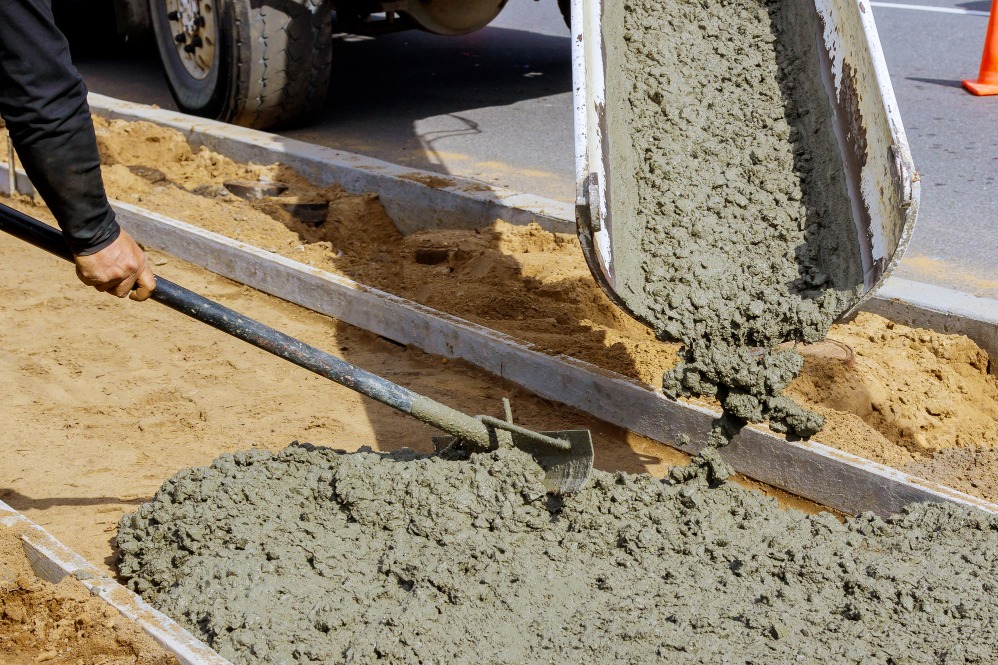
As structures become larger or more demanding, concrete specifications often become more specialized. M40 concrete is one of the higher-strength grades that may be specified for structural applications where engineering calculations call for greater performance.
For construction professionals in Bengaluru, understanding where M40 may be used—and what needs to happen before ordering it—can help prevent assumptions based solely on strength numbers.
What Is M40 Concrete?
M40 denotes concrete with a characteristic compressive strength of 40 N/mm² at 28 days under specified testing conditions.
That does not mean M40 should automatically replace M20, M25, M30, or M35. Concrete grades are selected based on structural design and project requirements.
The correct grade should therefore be confirmed through approved drawings and technical specifications.
Applications Depend on Engineering Design
Depending on the project, M40 concrete may be specified for structural components in:
- High-rise developments
- Commercial complexes
- Infrastructure works
- Industrial facilities
- Heavily loaded structural elements
- Large foundations
- Selected columns, beams, or slabs
Not every component within the same project necessarily requires the same concrete grade.
Why Higher Strength Requires Better Control
Higher-grade concrete typically requires tighter control over ingredients and production.
An M40 concrete supplier needs to manage material proportions, aggregate characteristics, water content, admixture dosage, batching, and delivery according to the approved mix requirements.
Increasing cement content without proper mix design is not a reliable method of producing higher-strength concrete. Concrete performance depends on the complete mix and production process.
Workability Cannot Be Overlooked
Strength is measured after concrete hardens, but successful construction begins while it is still fresh.
M40 concrete may need to pass through pumps, move around reinforcement, and fill complex formwork. The required workability should therefore reflect the planned placement method.
A project involving densely reinforced columns, for example, can present different placement conditions from a large open slab.
These requirements should be communicated before production.
Temperature and Delivery Conditions Matter
Bengaluru generally has a moderate climate, but site conditions, travel time, sunlight, wind, and waiting periods can still influence fresh concrete.
Concrete begins changing from the moment its constituents are combined. Efficient dispatch and placement planning are therefore important.
Construction teams should avoid treating transit mixers as temporary storage units while site preparation is completed.
Prepare Before Concrete Is Dispatched
A high-strength concrete pour should begin with a readiness check.
Before the first vehicle leaves the plant, the project team should confirm that:
- Formwork is complete
- Reinforcement has been inspected
- Embedded services are positioned
- Concrete pumps are operational
- Access routes are clear
- Labour is available
- Testing arrangements are ready
- Curing resources are planned
This preparation reduces delays once delivery begins.
Compaction Remains Essential
Concrete must properly occupy the available space around reinforcement and within formwork.
Insufficient compaction may create voids or honeycombing. Excessive or inappropriate vibration can also create problems.
Site teams should use suitable equipment and established concreting procedures for the structural element involved.
Curing Supports Designed Performance
Higher-grade concrete does not eliminate the need for curing.
Moisture retention and temperature management during the early stages of hardening support hydration and strength development. The curing approach should be selected according to project requirements and environmental conditions.
Ignoring curing after investing in controlled M40 concrete can undermine the quality objectives of the entire pour.
M40 Concrete Is Part of an Engineered System
The role of an M40 concrete supplier extends from accurate batching to coordinated dispatch, but performance ultimately depends on both production and site practices.
Bengaluru's expanding commercial, residential, industrial, and infrastructure sectors increasingly involve technically demanding construction. For these projects, concrete selection should remain tied to structural requirements rather than assumptions that a higher grade is always better.
When mix design, production, transportation, placement, testing, compaction, and curing are treated as one coordinated process, M40 concrete can be used in the manner intended by the project design.


