


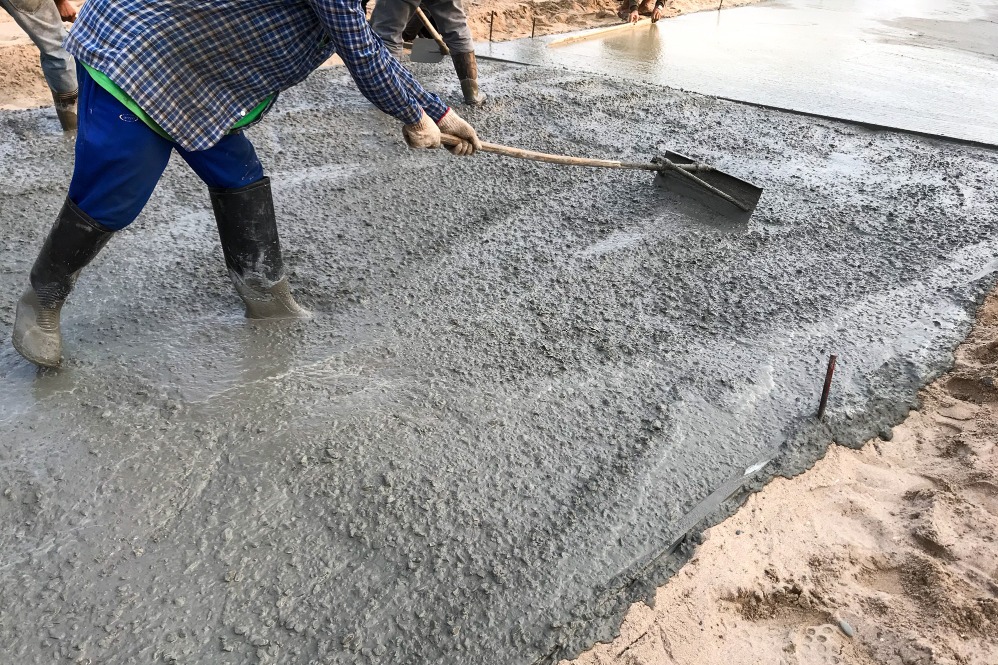
M20 concrete is widely used in residential and general construction because it provides a practical balance of strength, workability, and cost. However, the grade designation alone does not determine how concrete will perform. The consistency of raw materials, batching accuracy, water control, transportation, placement, and curing all influence the final result.
For builders and property owners in Bengaluru, understanding what goes into professionally produced M20 concrete can make it easier to evaluate material quality before starting foundations, slabs, beams, or other structural work.
What Does M20 Concrete Mean?
The M in M20 refers to the concrete mix, while 20 represents its characteristic compressive strength of 20 N/mm² after 28 days under specified testing conditions.
M20 is commonly considered for applications such as:
- Residential construction
- Reinforced concrete work where specified
- Foundations
- Floor slabs
- Beams and columns where approved by the structural design
- Small commercial structures
- General RCC applications
The appropriate concrete grade should always follow the structural drawings, engineering calculations, and applicable project specifications.
Why Production Accuracy Matters
A professional M20 concrete manufacturer does more than combine cement, sand, aggregate, and water. Concrete production requires controlled proportions to maintain predictable characteristics from one batch to another.
Small variations can affect workability and strength. Excess water, for example, may make concrete easier to place initially but can negatively influence hardened concrete performance.
Automated batching systems help measure ingredients more consistently than uncontrolled site mixing.
Material Quality Is Equally Important
The performance of concrete begins with its ingredients.
Cement should be appropriate for the intended mix design. Fine and coarse aggregates need suitable grading and cleanliness. Water quality should be controlled, while admixtures must be selected according to the required performance.
The moisture present in aggregates can also influence the effective water content of a batch. This is one reason controlled concrete production involves more than simply following fixed volume proportions.
Workability Must Match the Application
Concrete needs sufficient workability to be transported, placed, compacted, and finished effectively.
A heavily reinforced structural element may have different placement requirements from an open floor slab. Pumping conditions can also affect the required concrete characteristics.
Rather than adding uncontrolled water at the construction site, workability should be considered during mix planning and managed using appropriate production practices.
Transportation Can Affect Fresh Concrete
Bengaluru construction projects are often located in areas where traffic, narrow access roads, and busy development corridors can complicate material movement.
Ready mix concrete is therefore a time-sensitive construction material.
Batching plant location, dispatch coordination, travel time, site accessibility, and unloading arrangements should be considered before a pour begins. Good coordination helps reduce unnecessary waiting and supports smoother placement.
Placement Practices Still Matter
High-quality concrete can still perform poorly if site handling is inadequate.
Once concrete reaches the project, the construction team needs to manage:
- Safe and efficient unloading
- Appropriate placement
- Proper compaction
- Leveling and finishing
- Construction joint planning where required
- Timely curing
Concrete should not be treated as a finished structural component immediately after delivery. Site execution remains an essential part of achieving the intended performance.
Why Curing Cannot Be Ignored
Curing helps concrete retain the moisture needed for cement hydration and strength development.
Poor curing may contribute to surface cracking, reduced durability, or inadequate performance even when the original concrete was correctly produced.
The curing method and duration should suit the structural element, environmental conditions, concrete specification, and recommendations of the project engineer.
Understanding M20 Concrete as a Complete Process
Selecting an M20 concrete manufacturer is only one part of successful concrete construction. Mix design, production controls, transport planning, placement, compaction, finishing, and curing all work together.
In Bengaluru and across Karnataka, where construction ranges from individual houses to large residential developments, controlled concrete production can improve consistency compared with manually proportioned site mixing.
The most useful approach is to view concrete not simply as a mixture purchased by volume, but as an engineered construction material whose performance depends on careful control from batching through curing.


